Kitchen Exhaust Cleaning Intake Automation
Local Biz Agents for kitchen exhaust cleaning
Make hood cleaning requests easier to capture and follow up on.
Sensitive service requests can create extra admin work when the first message leaves out the site, document, due-window, access, or review details. Review where intake forms, reminders, summaries, and routing rules may help organize requests while compliance, safety, legal, inspection, certification, urgent, and pricing decisions stay with a person.
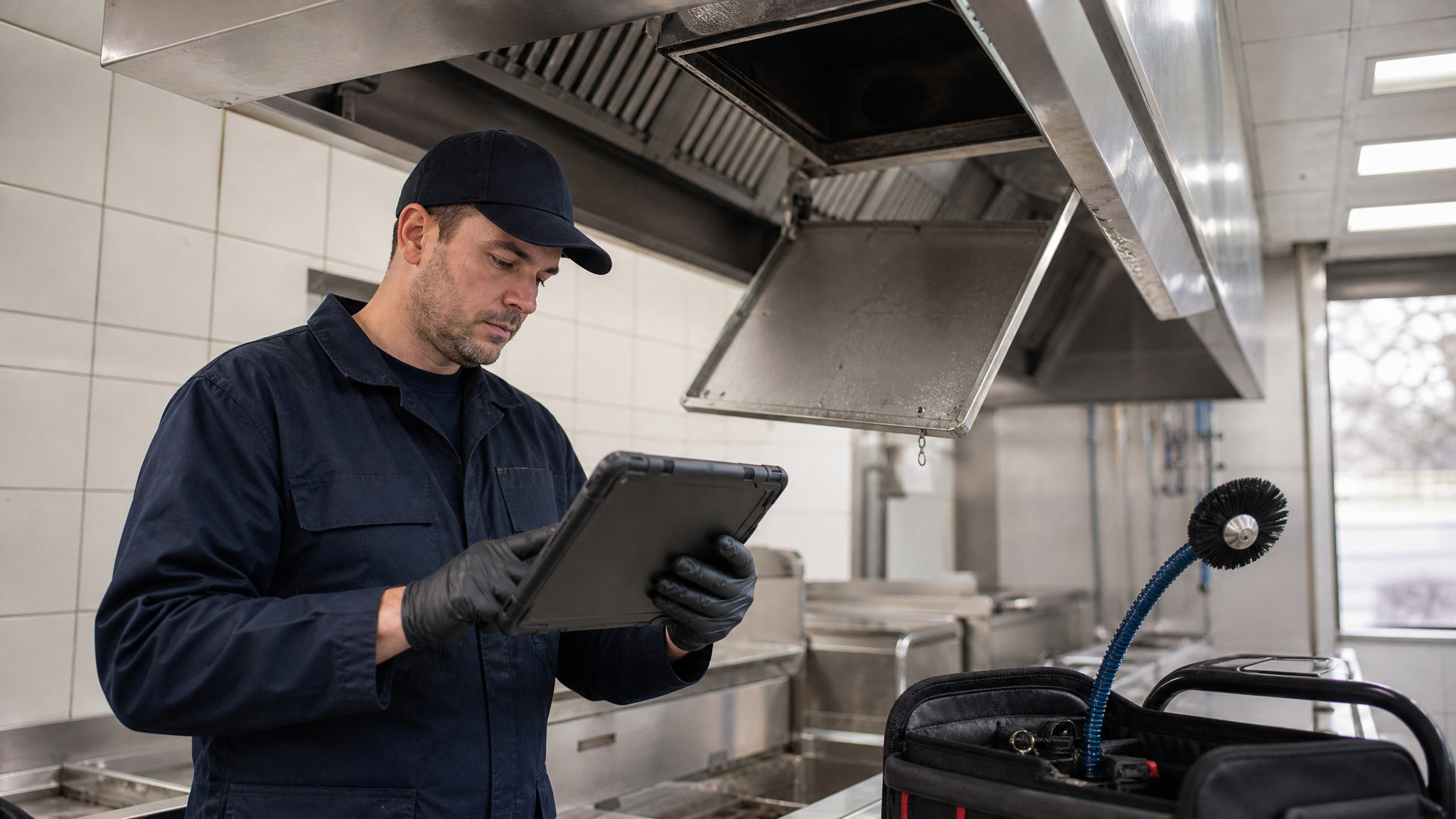
Kitchen exhaust cleaning intake problems to review
Night work creates missed daytime follow-up.
Intake workflows can log requests while crews are unavailable.
Recurring schedules can become scattered.
Reminder workflows can help organize upcoming follow-up.
Quote details need context.
Forms can collect hood count, location, access, preferred timing, and photos.
Practical Kitchen exhaust cleaning use cases
Call answering support
Review whether an answering workflow can capture caller name, request type, timing, and urgency.
Website intake
Review whether a form or chat can collect the details needed before staff follow up.
Follow-up reminders
Review whether reminders can help keep quote requests and missing details visible.
What you get
A clearer starting point for Kitchen Exhaust Cleaning automation
The assessment should make the next conversation easier. It should identify the workflow area worth reviewing, the details your team should collect, and the type of AI automation that may fit before anyone talks about software.
Workflow areas to review
Which request categories should be handled as simple intake, manual review, document follow-up, or urgent callback.
Details to collect
Which details should be collected consistently: site, account, photos, documents, access notes, due windows, and review flags.
Automation fit direction
Which automation lane may fit first: structured intake, reminders, summaries, routing labels, or admin handoffs.
Evidence-backed proof points
Why Kitchen Exhaust Cleaning intake is worth tightening
Here is why this matters before buying software. The strongest evidence points to admin burden, customer-response productivity, and email workload. For Kitchen Exhaust Cleaning, that makes the practical question simple: can the first-contact workflow collect better details and reduce repeated follow-up?
Small-business admin burden is real
QuickBooks found businesses with 10-99 employees spend 25 hours per week on manual data entry or app reconciliation.
Source: Intuit QuickBooks Business Solutions Survey.
AI improves customer-response work
NBER found AI-assisted customer support agents resolved 13.8% more issues per hour.
Source: NBER, Generative AI at Work.
AI reduces email workload
Harvard/NBER found frequent AI users spent 31% less time on email each week.
Source: Harvard Business School / NBER, Shifting Work Patterns with Generative AI.
What that means for this business
Better first-contact records
Collect the record details a reviewer needs before a callback, quote, document request, or renewal reminder.
Cleaner human handoffs
Flag compliance, safety, legal, inspection, certification, or urgent language for human review.
Follow-up that has an owner
Assign the next person, due window, and follow-up reminder so sensitive requests do not sit in a general inbox.
These proof points support workflow review. They do not guarantee savings, booked jobs, lower costs, or a specific result.
Citations: Intuit QuickBooks Business Solutions Survey; NBER, Generative AI at Work; Harvard Business School / NBER, Shifting Work Patterns with Generative AI.